Siensmetrica Launches Tessa, an AI-Powered Platform for Biomedical Research Evaluation
FOR IMMEDIATE RELEASE
TUCSON, Ariz. – May 19, 2026 — Siensmetrica today announced the public release of Tessa, an AI-powered platform designed to help researchers, clinicians, reviewers, and healthcare professionals evaluate the integrity and reliability of biomedical and healthcare research more efficiently.
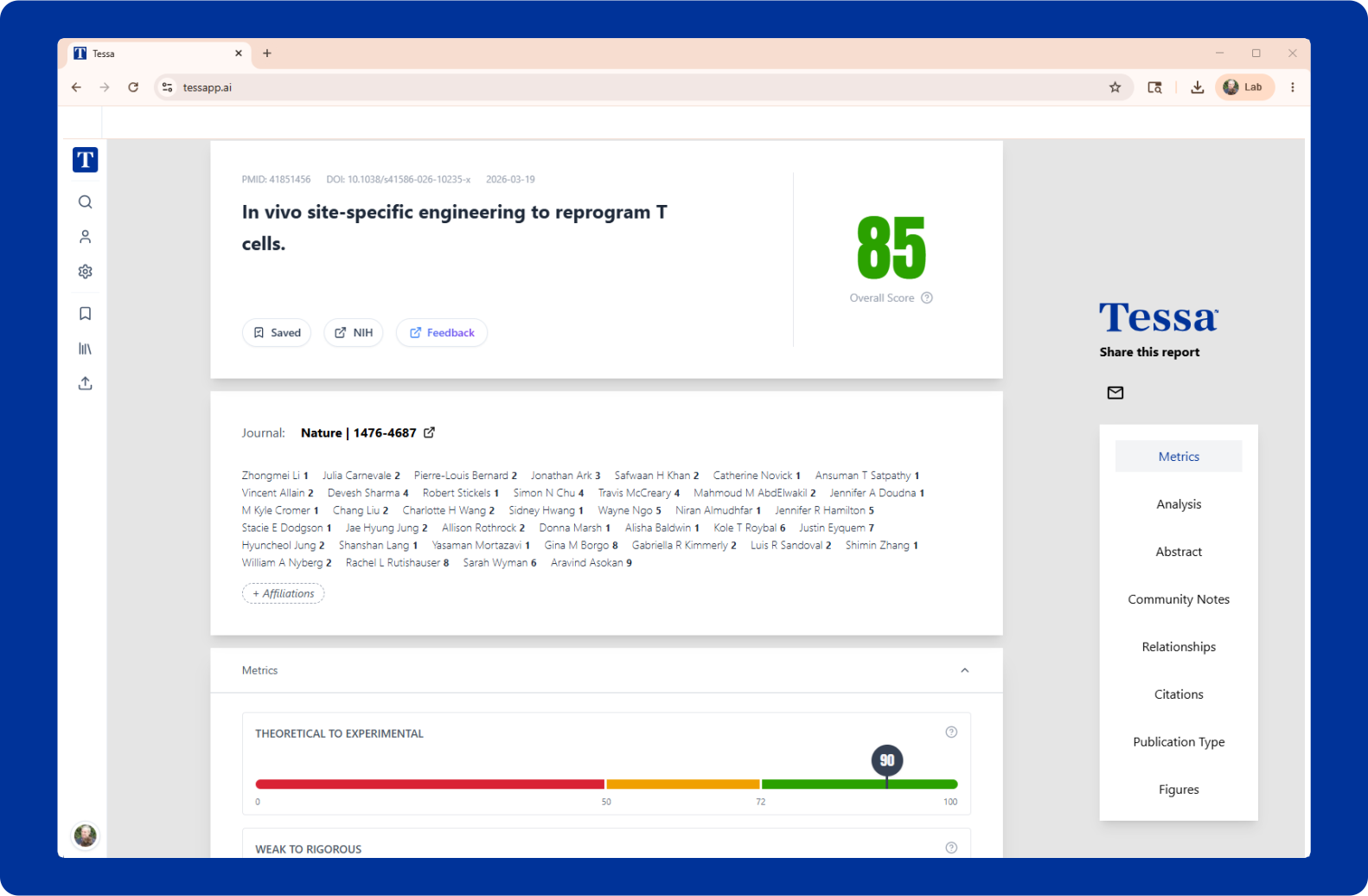
Available immediately at no cost to users with a Google or Google Workspace account, Tessa applies Siensmetrica’s proprietary T.E.S. (Transparency, Explainability, and Significance) framework to analyze scientific literature in minutes, helping reduce the time traditionally required for detailed research review and validation.
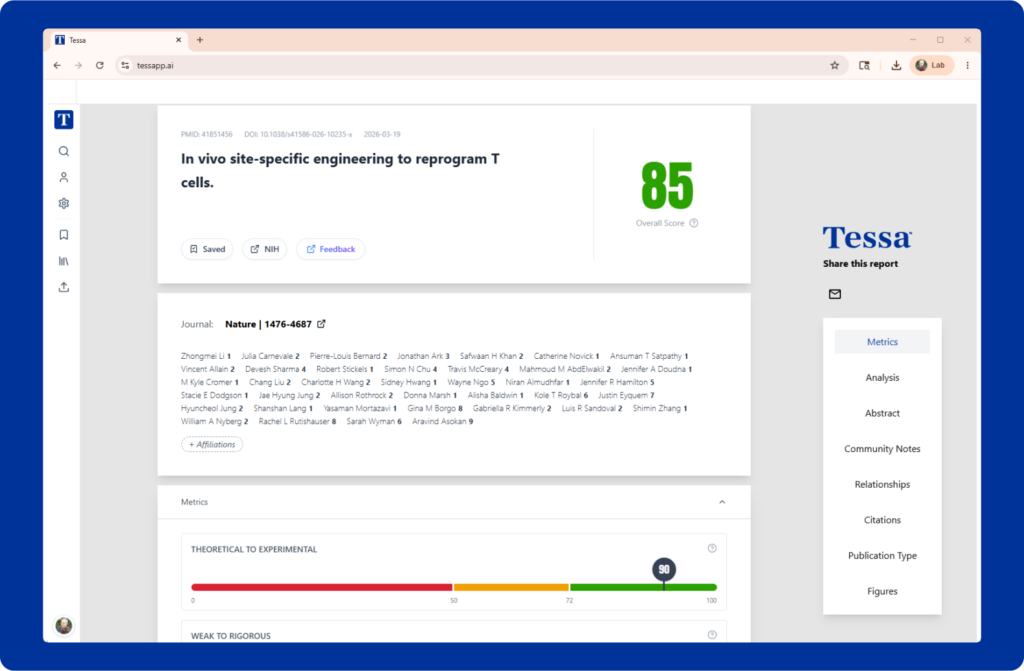
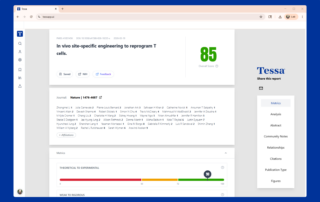
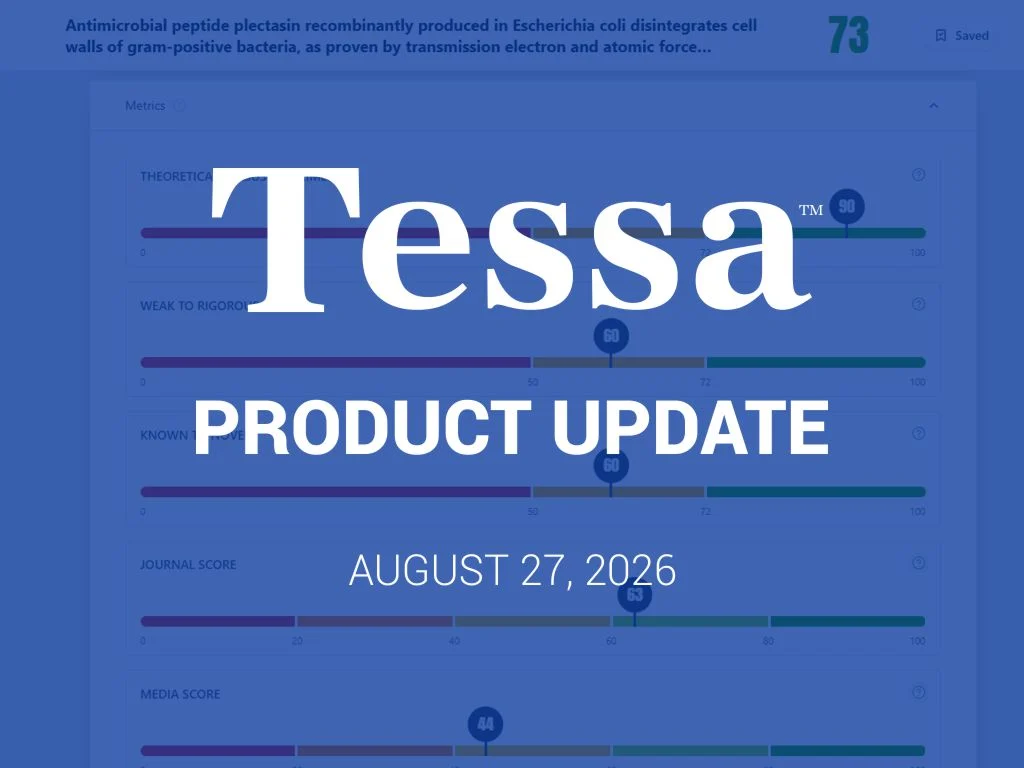
The Tessa score and paper evaluation
The platform is intended to support a broad range of users across the scientific and medical community, including academic medical centers, biopharma organizations, peer reviewers, policy analysts, clinicians, and independent researchers seeking clearer insight into study quality and methodological rigor.
Rather than functioning solely as a summarization tool, Tessa uses a coordinated system of specialized AI agents trained in biomedical research methodologies, evaluation frameworks, and scientific review practices. These agents independently assess findings and cross-validate conclusions before generating a final analysis.
Tessa is organized into three analytical modules designed to address different levels of research evaluation needs:
Analytical Modules
Search, Score & Save
Designed for clinicians, researchers, and general readers seeking a fast assessment of a paper’s credibility and relevance.
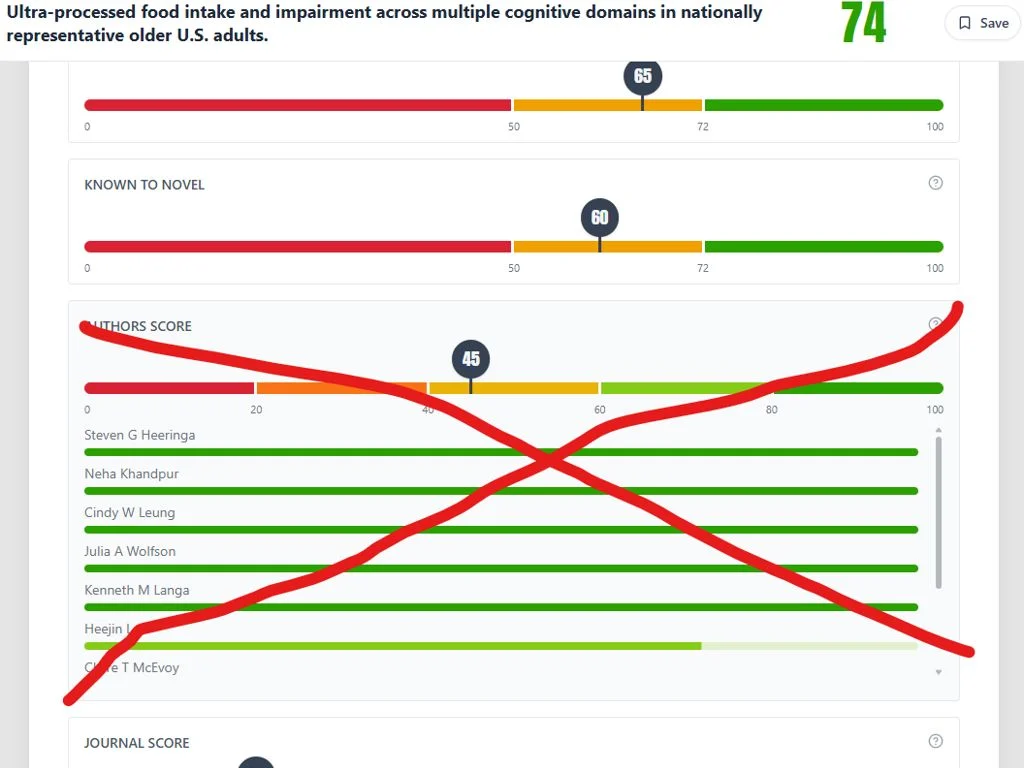
- T-Score: Evaluates more than 200 indicators across five categories — methodology, author metrics, journal impact, media coverage, and authenticity signals — to generate an overall trustworthiness score from 0 to 100.
- Visual Quality Indicators: Uses color-coded tagging to provide quick reference indicators for paper quality and reliability.
- Research Summaries: Summarizes a study’s objectives, findings, conclusions, and field-specific contributions.
- Ecosystem Mapping: Generates interactive relationship maps connecting authors, institutions, collaborators, and funding organizations.
- Integrity Review Tools: Links to Google Scholar author profiles and extracts study figures for reverse-image lookup to help identify duplicate image usage online.
- Personal Research Library: Allows users to save and organize evaluated papers for future reference.
Citation Analysis
Designed for academic institutions, peer reviewers, publishers, and organizations producing or evaluating scientific literature.
- Reference Verification: Cross-checks citations against major biomedical databases including PubMed, Embase, Scopus, and MEDLINE to identify unverified or potentially problematic references.
- Contextual Citation Review: Evaluates whether cited sources appropriately support the claims made within a paper.
- Anomaly Detection: Flags potential concerns such as excessive self-citation, citation padding, retracted references, or post-publication citation inconsistencies.
- Citation Relevance Scoring: Assigns relevance scores to individual citations and provides an aggregate citation assessment for the publication.
Deep Dive Analysis
Developed for biopharma organizations, policymakers, funding groups, and other stakeholders conducting high-level scientific due diligence.
- Methodology Classification: Identifies study type, model systems, and supporting textual evidence used in the analysis.
- Scientific Rigor Assessment: Evaluates study completeness and methodological rigor across 11 domains, including hypothesis clarity, control adequacy, statistical analysis, dose-response validation, and replication quality.
- Protocol Evaluation: Provides structured assessments of protocol design, assessability, supporting evidence, and methodological adequacy.
- Strategic Research Insights: Highlights strengths, limitations, and areas where additional validation or methodological refinement may be warranted.
Integration with Zotero
To support existing scientific research workflows, Tessa integrates with Zotero, the widely used open-source research management platform. The integration enables users to import, score, and organize large collections of scientific papers in bulk, helping researchers identify higher-quality studies more efficiently. Additional third-party integrations are currently in development.
Availability
Tessa is now publicly available with no subscription fees, contracts, or credit card requirements.
- Access Tessa: www.tessapp.ai
- Learn more about Siensmetrica: siensmetrica.com
###