Good Science Stands Alone: Why We Killed the Author Score
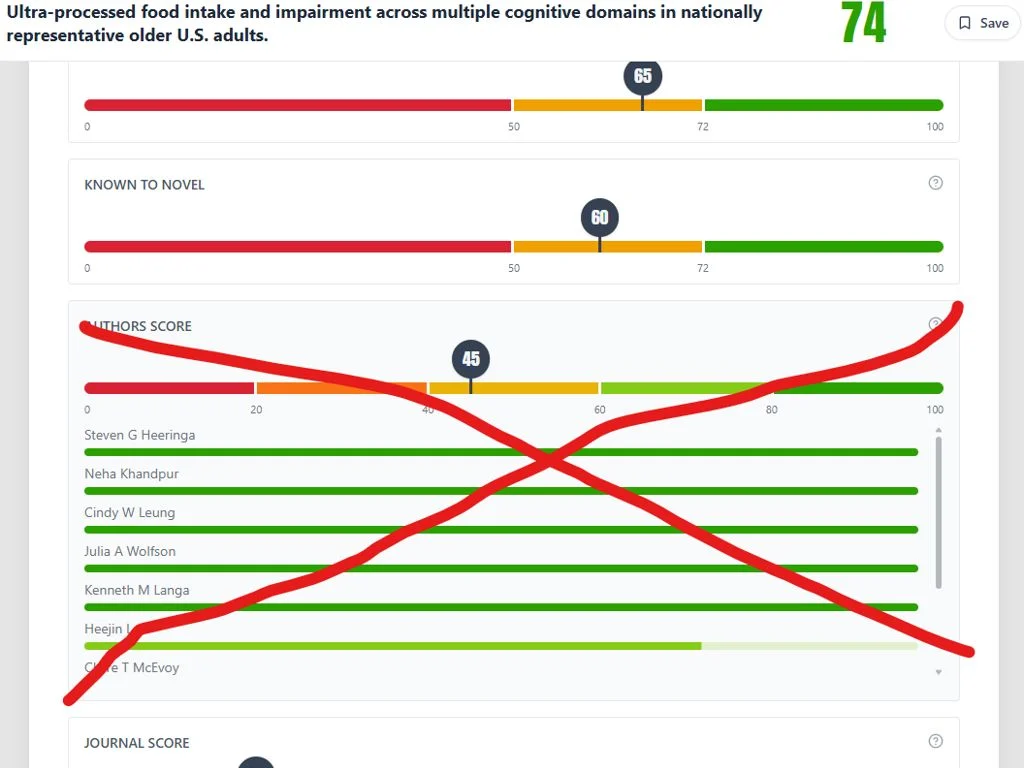
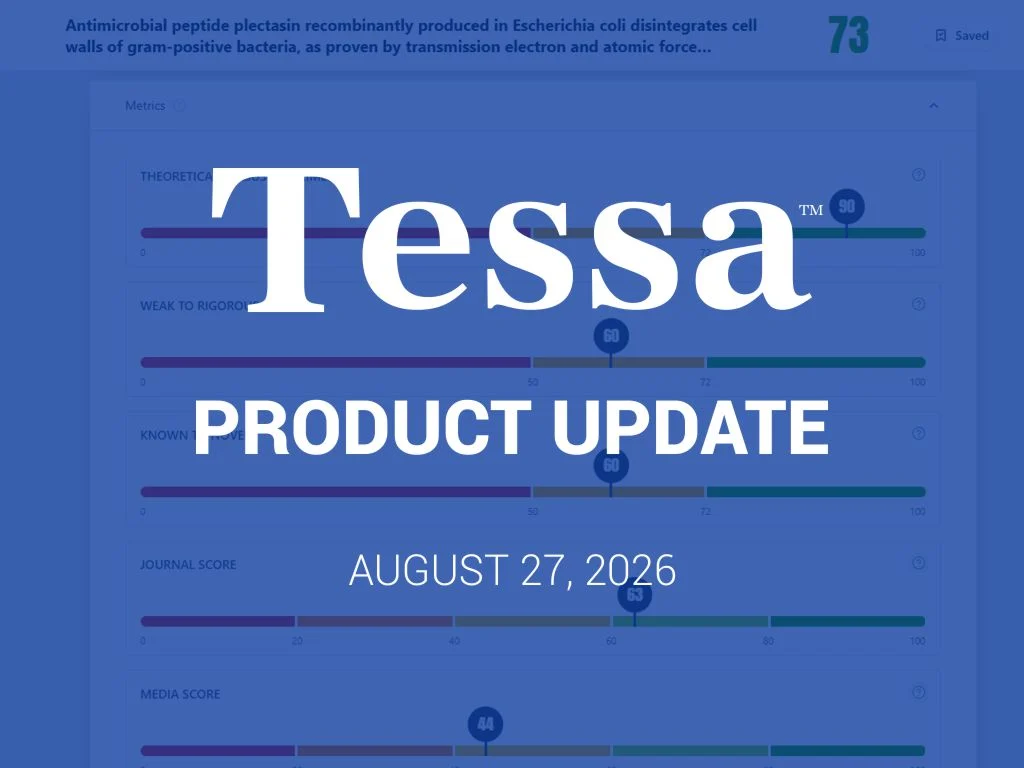
You might have caught our recent announcement on the latest updates to Tessa, our AI-powered medical research analysis platform. Buried in the changelog is one decision that’s going to ruffle some feathers in academia: we completely removed the Author Score from our core trustworthiness rating (TScore) and redistributed its weight across our direct methodological metrics.
Here’s why we pulled the trigger, where author analytics live now instead, and why the traditional scientific hierarchy needs a reality check.
The Famous-Actor Fallacy
When we first built Tessa’s scoring logic across 200+ distinct data points, we included legacy benchmarks like Journal Impact Factor and author h-index. Why? Because that’s historically how the scientific community has evaluated credibility. If a paper came out of a high-profile lab with a heavily cited principal investigator, people assumed the work was solid.
Then we ran the numbers.
As Tessa processed thousands of papers across biomedical and healthcare literature, the data told a different story: an author’s h-index tracks publishing volume and career longevity, not the quality of any one paper.
Think of it like a Hollywood star. Two Oscars on the mantle didn’t stop your favorite actor from headlining last summer’s box-office disaster. A great track record is no guarantee the next project isn’t a dud.
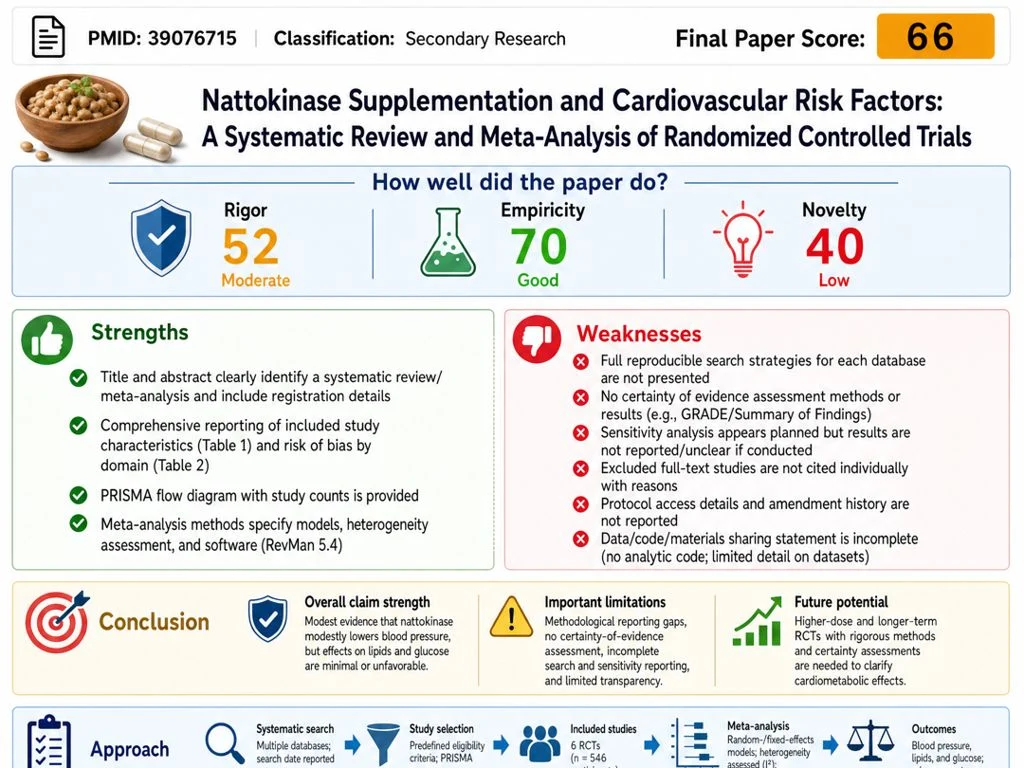
In science, leaning on author prestige creates a dangerous halo effect: flawed methodology gets a free pass because a famous name sits on the title block. Good research has to stand on its own merits, so we stripped the author bias out. Now Tessa scores papers strictly on what actually matters: transparency, explainability, and significance — T.E.S.
Author History Isn’t Gone, It’s Just Not Grading the Paper
Removing the Author Score from the TScore doesn’t mean author history is irrelevant. Context still matters. It just shouldn’t be allowed to corrupt the objective evaluation of a single study.
So we built the Author Report: a dedicated dashboard, one click away from any author name in a Tessa Summary, with:
- A complete, interactive list of their published work
- Direct integration with their Google Scholar profile
- A standalone Author Score, built on i10-index principles (publications with 10+ citations)
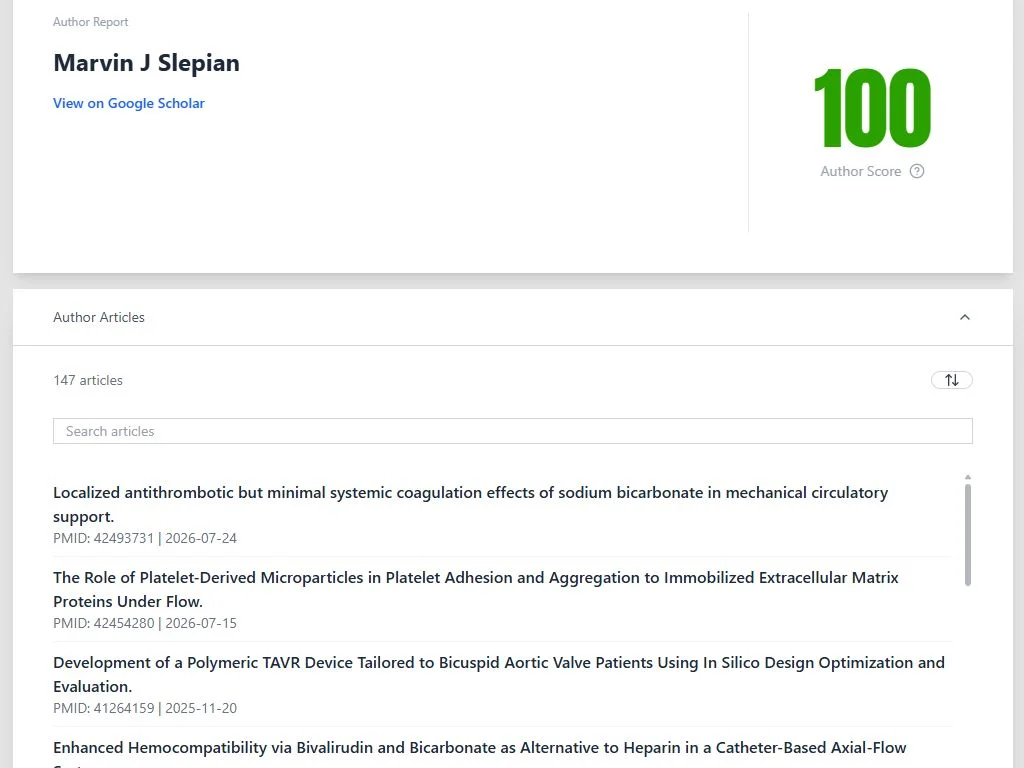
The New Author Report
Full transparency: this standalone Author Score is still a work in progress. Like the h-index it’s modeled on, it doesn’t fully capture early-career researchers doing brilliant work, and it doesn’t properly weight the rare, seminal paper that racks up thousands of citations over time. We’re actively tuning the algorithm to better reflect real long-term contributions in future releases.
The difference is where this data lives. It’s context in a separate room, not a thumb on the scale of whether today’s paper is actually any good.
Science Over Status: What We’re Coming for Next
We expect pushback from academic traditionalists. The system has run on institutional prestige and author reputation for centuries, and disrupting that incentive structure is going to make some people uncomfortable.
That’s fine. We’re not here to protect academic egos, we’re here to fix how science gets validated. Good research is good research, no matter whose name is on it.
While we’ve got your attention: there’s another legacy prestige metric still sitting in our algorithm, and it’s next on the chopping block: the Journal Score.
The scientific community has long operated on the unproven assumption that a paper in a top-tier journal is inherently better than one in an open-access repository or a niche journal. As Tessa tears through thousands of new papers every week, we’re collecting the data to test that assumption directly.
Are top journals actually publishing better science, or are they just gatekeeping? How many high-rigor “sleeping beauties” are getting ignored simply because they didn’t land at a prestigious publication?
We have the data. Stay tuned.
Share This →
About the Author: Greg Bolcer

Recent Posts