Can a Cheap Soybean Extract Really Clean Out 95% of Arterial Plaque?
If you follow health influencers or longevity experts online, you’ve likely heard about Nattokinase, an enzyme derived from fermented soybeans.
It’s frequently hyped as an inexpensive miracle supplement that can single-handedly melt away up to 95% of arterial plaque, offering a cheap alternative to expensive statins or invasive surgical procedures.
Influencers routinely point to scientific literature to back up these bold claims. But does the published research actually say what they claim it does?
To separate online hype from scientific reality, we ran a Tessa analysis on one of the primary systematic reviews frequently cited to validate nattokinase: “Nattokinase Supplementation and Cardiovascular Risk Factors: A Systematic Review and Meta-Analysis of Randomized Controlled Trials.“
Here is what Tessa revealed when we put this paper under the microscope.
What the Paper Actually Showed
Despite social media claims that nattokinase clears plaque and dramatically lowers cholesterol, this meta-analysis of randomized controlled trials (RCTs) found something very different:
- No Plaque Busting or Lipid Lowering: Across the pooled trial data, nattokinase showed no consistent lipid-lowering effect. In fact, lower total doses of nattokinase were actually associated with a slight increase in total cholesterol and LDL (“bad”) cholesterol, and a slight decrease in HDL (“good”) cholesterol.
- Modest Blood Pressure Reduction: The paper did confirm a small, statistically significant drop in blood pressure (roughly 3.4 mmHg systolic and 2.3 mmHg diastolic). While helpful, this modest drop is a far cry from replacing standard medical treatments.
- A Slight Increase in Blood Glucose: The analysis noted a small but statistically significant increase in fasting blood glucose among participants taking nattokinase.
The Tessa Overall Score
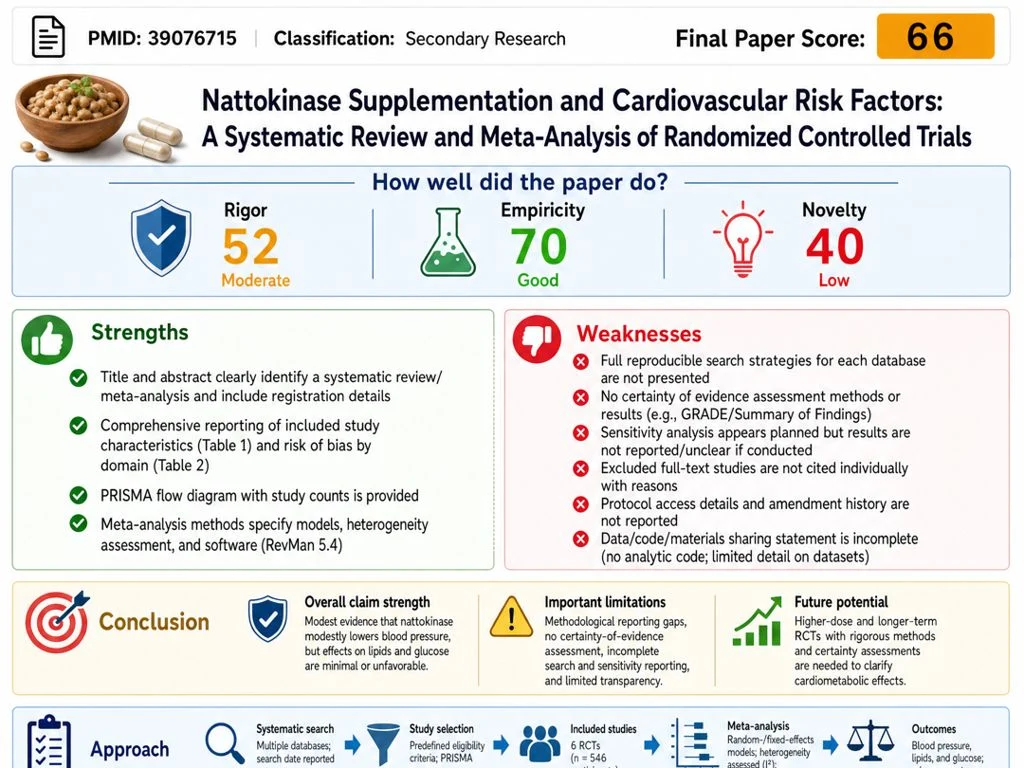
TScore: 66 / 100 (🟡 Yellow – Caution)
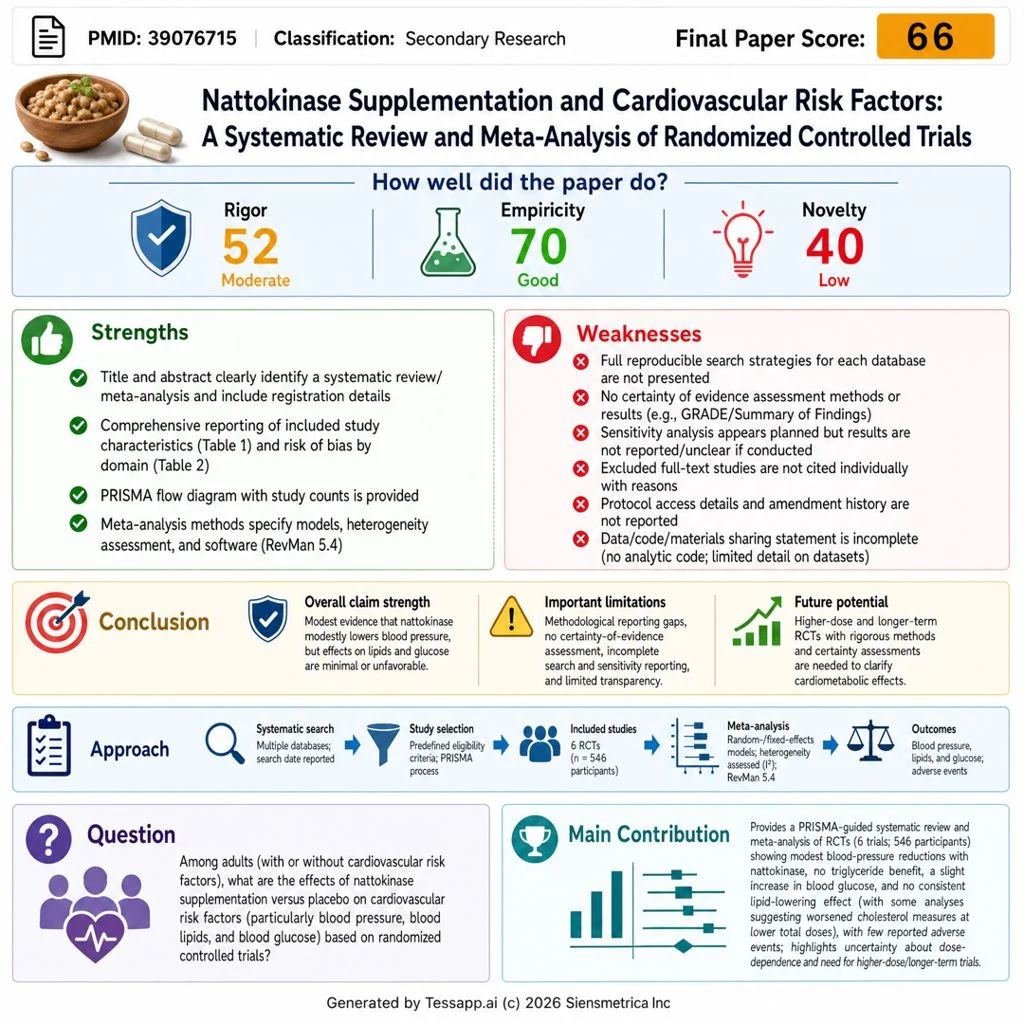
A graphical illustration of Tessa’s analysis of the paper
Tessa Analysis Results
📊 Tessa Sub-Scores
| Research Metric | Score | Tessa Insight |
|---|---|---|
| Theoretical vs. Experimental | 🟢 70 | Grounded in clinical trial data, but synthesizes secondary data rather than generating new primary evidence. |
| Weak to Rigorous | 🟡 53 | Methodologically structured, but limited by small sample sizes and trial heterogeneity. |
| Known to Novel | 🔴 40 | Incremental review of previously studied concepts rather than groundbreaking new science. |
The Tessa Analysis Breakdown
While the authors followed standard PRISMA reporting protocols (achieving an 88% completeness score), Tessa Pro’s deep-dive evaluation highlighted major structural vulnerabilities in the underlying evidence:
- Methodological Quality (AMSTAR 2): 🔴 Critically Low Confidence — Although the authors conducted duplicate screening and used standard risk-of-bias tools, the review suffered from critical methodological gaps. Key issues included an incomplete search strategy (excluding trial registries and grey literature), failure to provide a detailed list of excluded studies with justifications, and no reporting on the funding sources of the primary trials analyzed.
- Certainty of Evidence (GRADE): 🔴 Very Low Certainty — When evaluated using the GRADE framework across 8 primary outcomes, the certainty of evidence dropped to Very Low for most findings, including LDL, HDL, blood pressure, and adverse event reporting. The primary driver for this rating was the small number of overall participants (only 6 RCTs totaling 546 subjects) combined with unexplained heterogeneity (variability) between trial results.
- Citation Integrity: Tessa’s citation engine verified 95% of the paper’s references with an average relevance score of 7.1/10, showing solid context alignment without evidence of aggressive citation padding.
The Bottom Line: While the systematic review itself was conducted in good faith, the actual primary data simply does not support the massive health claims circulating on social media.
See for yourself: Read the full, objective Tessa analysis report here (includes links to the study): https://www.tessapp.ai/report/39076715
If you’re interested in similar studies, check out the Tessa analysis of these:
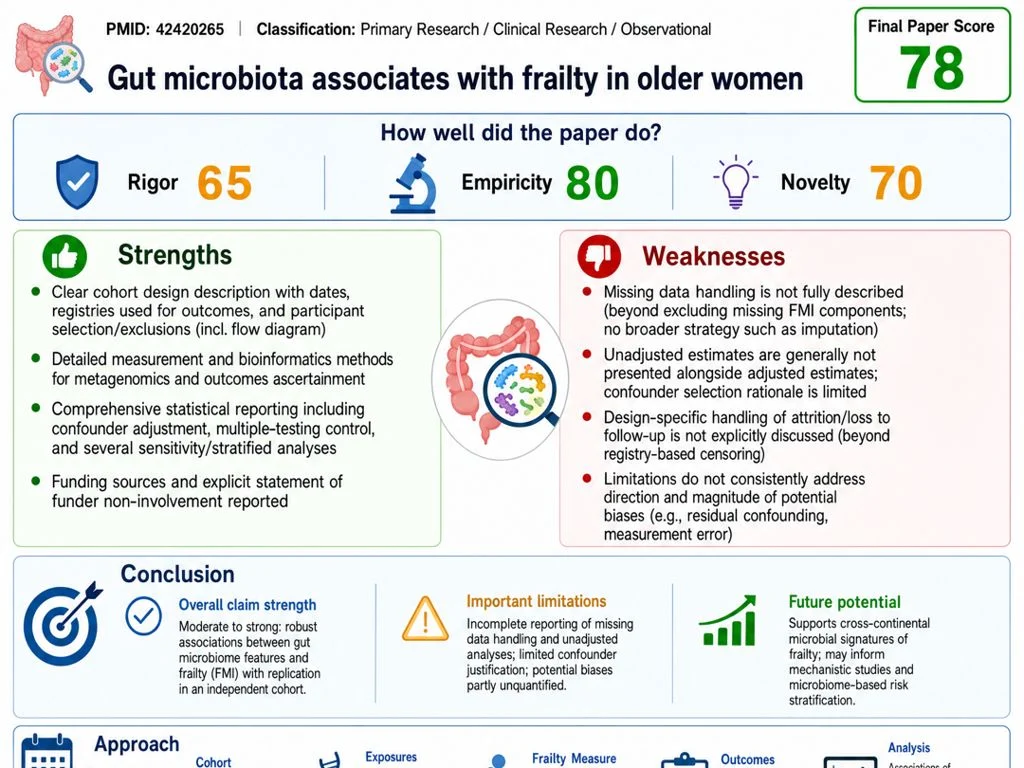
- Cohort Study (1,062 people): (65 / 100 (🟡 Yellow) — Effective management of atherosclerosis progress and hyperlipidemia with nattokinase: A clinical study with 1,062 participants. (Frontiers in cardiovascular medicine)
- Narrative Review: (50 / 100 (🟡 Yellow) — Research Progress of Nattokinase in Reducing Blood Lipid. (Nutrients)
Share This →
About the Author: Sage Osterfeld

Research Spotlight


Recent Posts