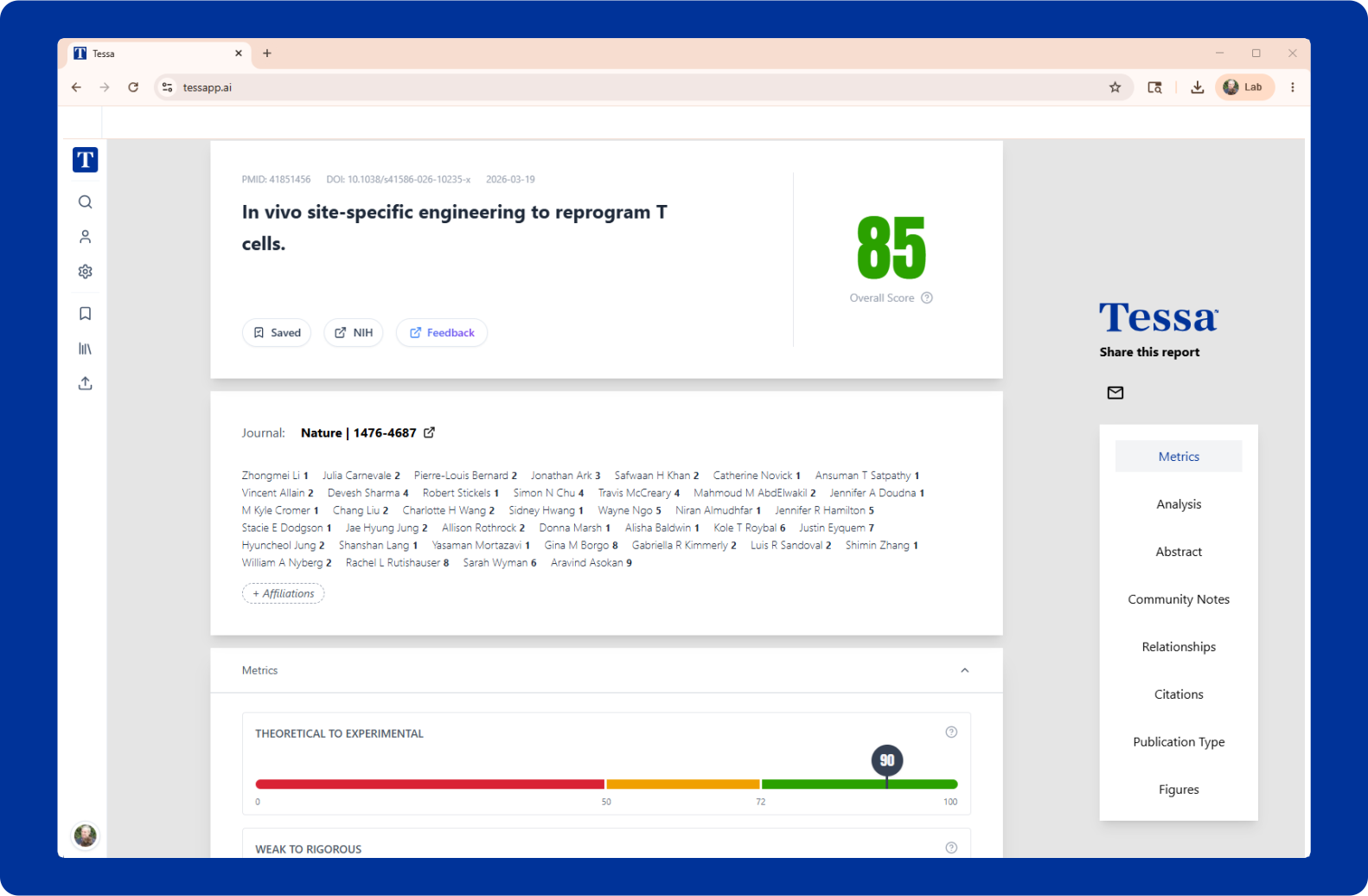
Painting vs. Pilates: Can a Museum Match the Longevity Benefits of the Gym?
How Tessa evaluated the viral study linking arts engagement to slower cellular aging.

Turns out art, like exercise can keep you young
A study published in the journal Innovation in Aging set out to answer exactly that. The title? “Does frequency or diversity of leisure activity matter more for epigenetic ageing? Analyses of arts engagement and physical activity.”
The internet headlines practically write themselves: “Skip the Gym, Hit the Museum!”
But here at Siensmetrica, we don’t just graze the headlines, we run them through Tessa, our AI-powered research trustworthiness system built on the core principles of Transparency, Explainability, and Significance. Here is what the study found, and what a deep dive into the data actually tells us.
The Claims: Art vs. Exercise
The researchers utilized data from over 3,500 UK adults to see how leisure activities impact advanced DNA-methylation “epigenetic clocks” (specifically PhenoAge, DunedinPoAm, and DunedinPACE). These advanced cellular tests are designed to measure physical healthspan and how fast the human body is declining, rather than just looking at a birth year.
The findings were remarkable:
- The Equalizer: Engaging in arts and culture (like painting, singing, or visiting historic sites) showed an “anti-aging” effect on these cellular clocks that was comparable in strength to physical exercise.
- The 40+ Boost: While the benefits apply broadly, the relationship between these leisure activities and slower biological aging was notably stronger in middle-aged and older adults.
On the surface, it’s a beautiful validation for the culturally curious. But what happens when we look under the hood?
The Tessa Evaluation: A Solid 73 (Green)
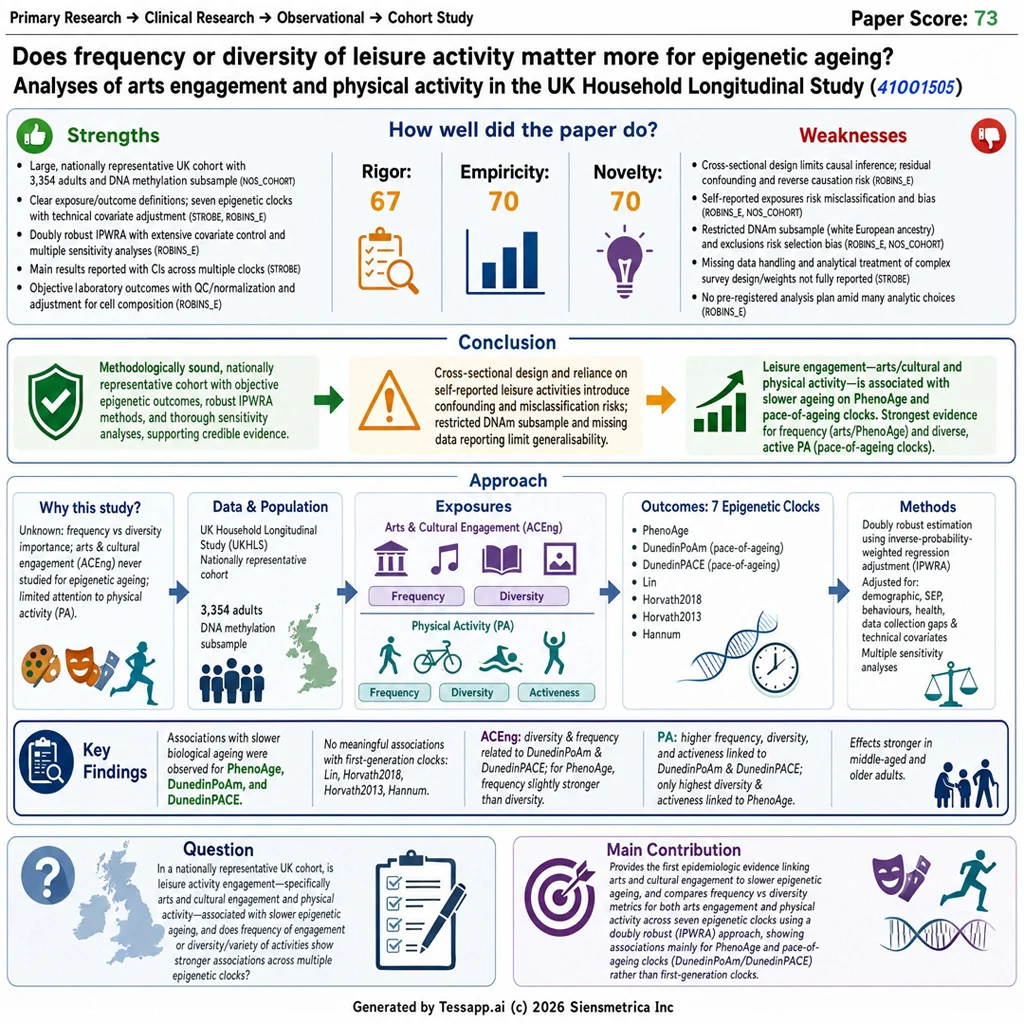
When we put this paper through Tessa, our open access tool that analyzes over 200 data points across five critical categories, it generated a TScore of 73. Under our data validation parameters, that places the study firmly in the Green (Trustworthy) zone.
Overall T-Score: 73/100 (Green 🟢)
A Green score means the foundational science is highly reliable. However, as any scientist will tell you, there is no such thing as “perfect” in research. Tessa broke down the exact data points to show us why this paper earned its Green status, and where the boundaries of that trust lie:
- The boundaries of a 73: This is a cross-sectional, observational study relying on self-reported data. While the math is excellent, it proves a strong association, but it cannot definitively prove causality. Do arts slow down aging, or are naturally healthier, slower-aging people simply more likely to have the disposable time and energy to visit museums?
The Tessa Takeaway
A Green TScore means you can trust the data integrity of this study—the science is solid. However, even the best observational research leaves open the ultimate question of cause and effect.
If this study caught your eye, it makes for fantastic lunchtime conversation. We highly encourage you to read the full, Tessa Report. Beyond just the headline score, the complete report maps out the researchers’ exact data models, adjusts for socioeconomic factors, and provides a deeper breakdown of individual sub-scores like author history, journal metrics, and media discussion. It’s an excellent read for anyone who likes to look past the media hype and see how a breakthrough is actually constructed.
Ultimately, this paper beautifully articulates something we all intuitively understand: a vibrant, creative life is vital for our well-being. So the next time you’re debating between an extra hour on the treadmill or a quiet afternoon wandering an art gallery, remember that exercising your imagination might just be doing as much to keep your cells young as a heavy cardio session.
It turns out that giving your mind a workout can be just as good for your health!
Share This →
About the Author: Sage Osterfeld

Research Spotlight


Recent Posts