Daily Multivitamins and Brain Aging: What the Latest COSMOS Data Tells Us
For decades, the conversation surrounding daily multivitamin-mineral (MVM) supplements has felt like a pendulum swing. Are they an essential insurance policy for your health, completely harmless but useless “expensive urine,” or somewhere in between?
A major study published in The American Journal of Clinical Nutrition offers some of the most rigorous data yet on how a daily multivitamin impacts the aging brain. The research, stemming from the massive Cocoa Supplement and Multivitamin Outcomes Study (COSMOS) led by researchers at Harvard and Massachusetts General Hospital, specifically looked at cognitive decline in older adults.
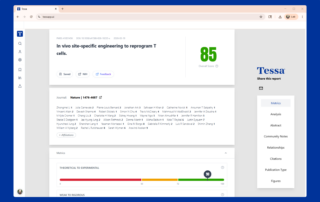
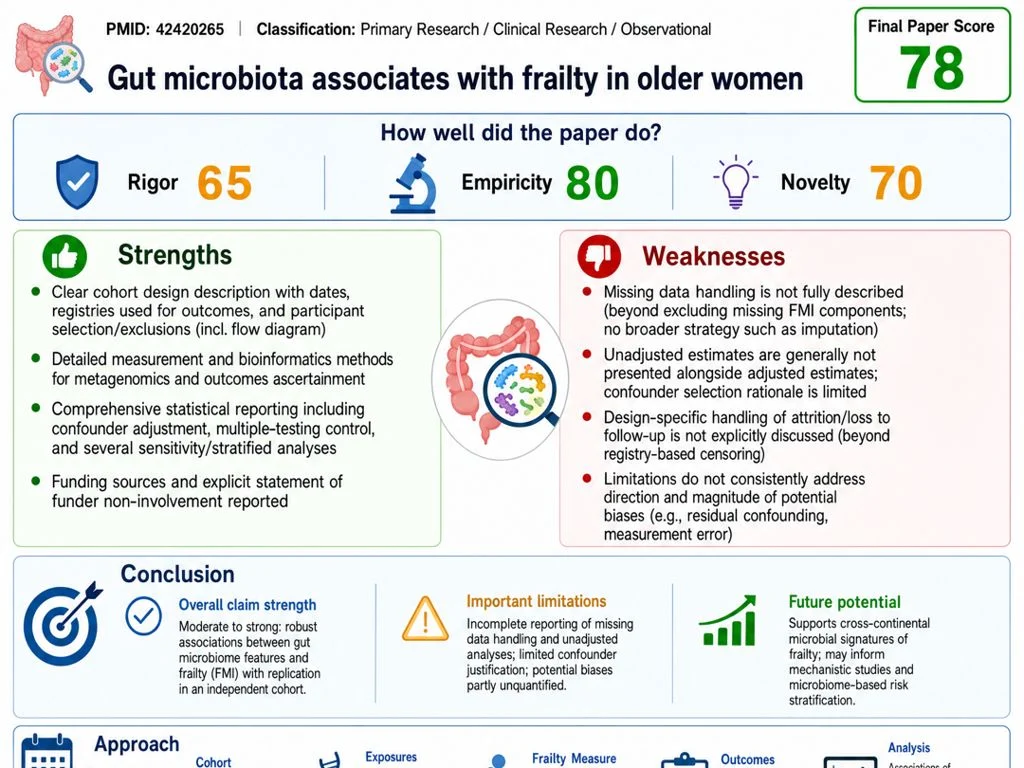
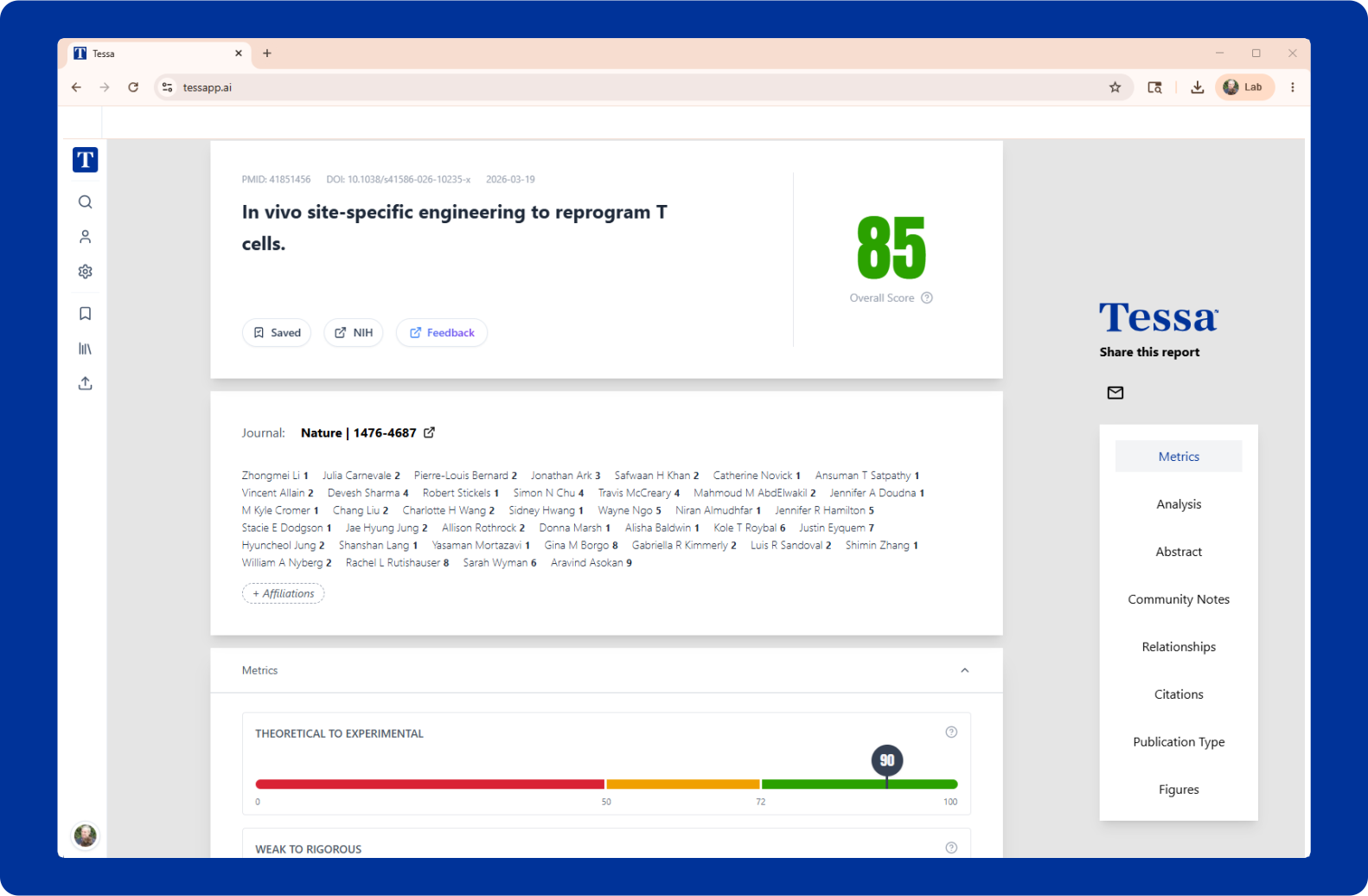
To find out how much weight these findings truly hold, we ran the study through Tessa, our AI-powered research integrity and trustworthiness assessment system.
The Study at a Glance: What Did the Researchers Find?
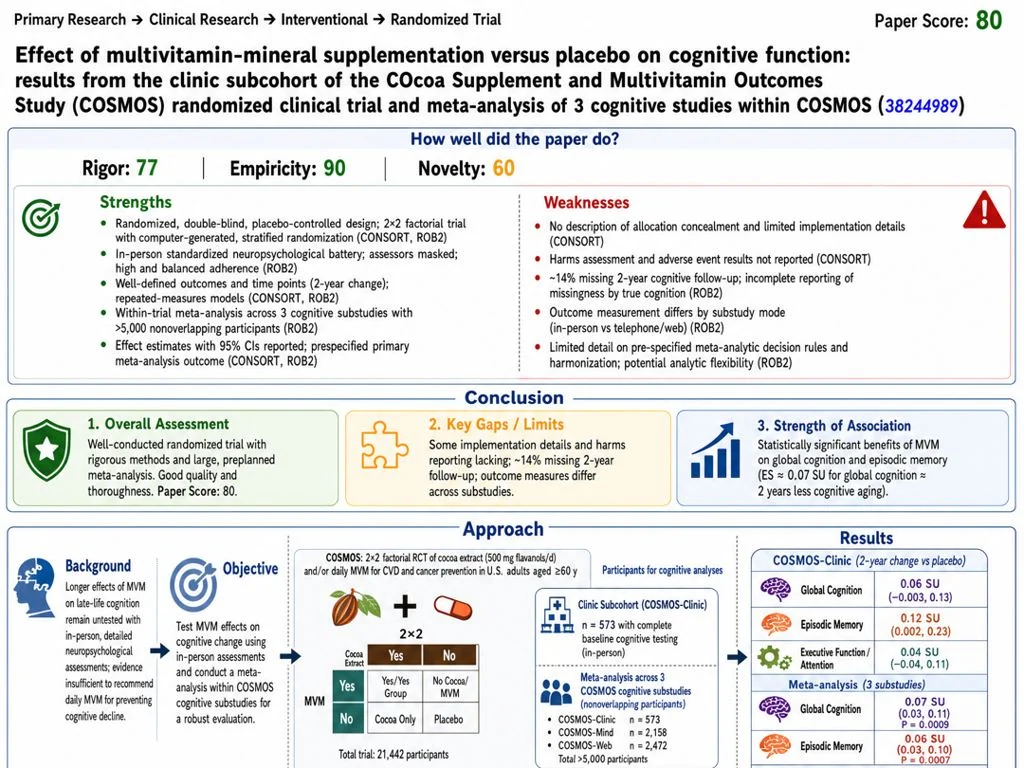
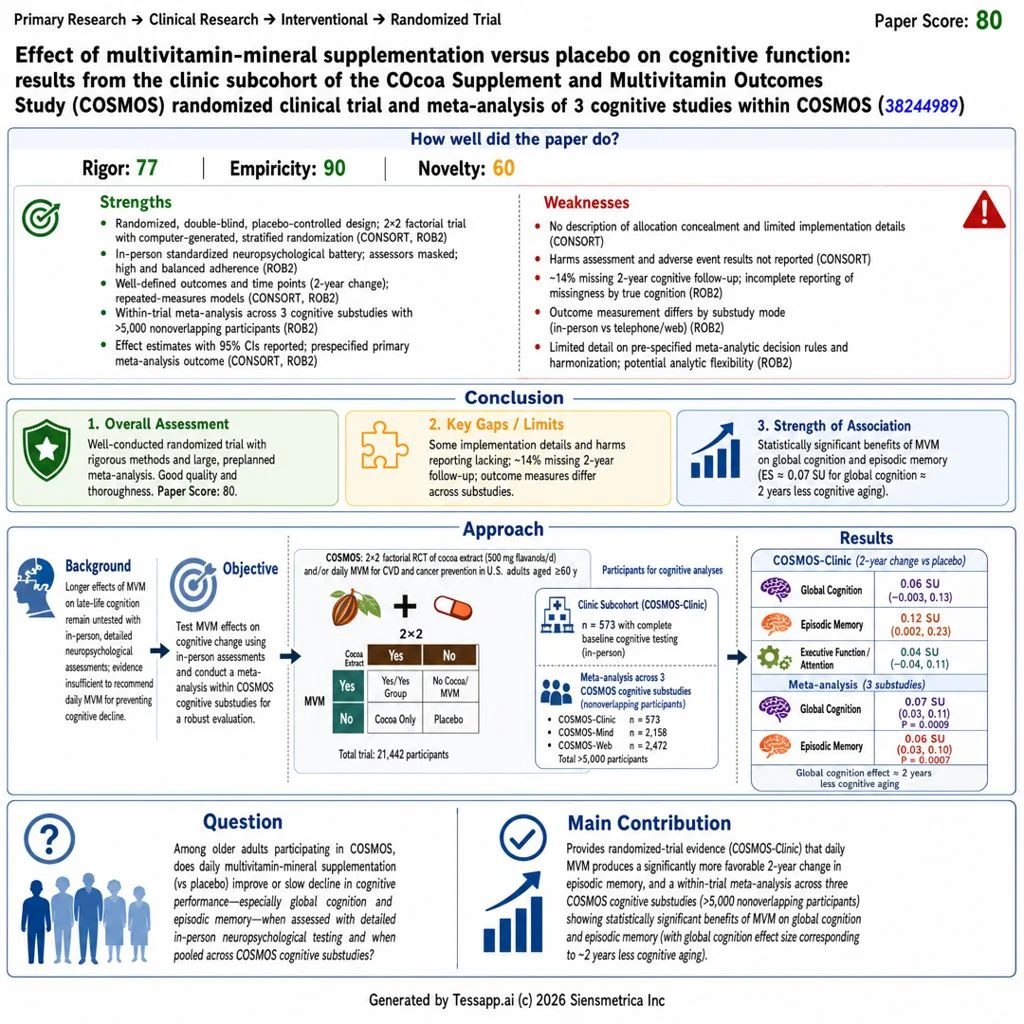
The COSMOS researchers evaluated a specific subcohort of 573 participants over two years using detailed, in-person neuropsychological exams (the “COSMOS-Clinic” group). They also conducted a meta-analysis pooling data from over 5,000 participants across three separate COSMOS sub-studies (Clinic, Mind, and Web).
The headlines coming out of the study were highly encouraging:
- Memory Boost: In the in-person clinic group, daily multivitamin use led to a statistically significant, more favorable change in episodic memory over two years.
- Slowing Brain Aging: When looking at the pooled meta-analysis of all 5,000+ participants, daily multivitamins showed clear benefits for both global cognition and episodic memory.
- The “2-Year” Effect: Most notably, the researchers estimated that the magnitude of the multivitamin’s effect on global cognition was equivalent to reducing cognitive aging by roughly 2 years compared to the placebo group.
Inside the Data: Tessa’s Trustworthiness Breakdown
Tessa evaluates scientific papers across five distinct categories to generate an overall TScore (Trustworthiness Score) from 0 to 100.
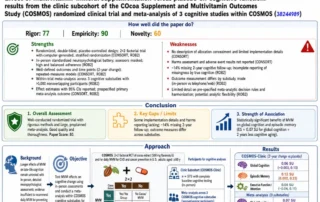
COSMOS Cognitive Study Tessa Score: 80 (Green 🟢 / High Trust)
A TScore of 80 is an excellent result in biomedical literature, indicating a highly rigorous study, though not entirely without caveats. Here is how Tessa broke down the paper’s strengths and limitations:
Where the Study Excelled
- High Experimental Rigor (90/100): This wasn’t just a survey asking people if they take vitamins. It was a randomized, double-blind, placebo-controlled clinical trial—the gold standard of medical evidence.
- Gold-Standard Testing: Unlike prior studies that relied purely on phone or internet surveys, the core clinic group underwent detailed, 45-minute, in-person neurological testing, which catches incredibly subtle shifts in brain function.
- Flawless Journal/Author Track Record: The authors hail from top-tier institutions (Harvard, Brigham and Women’s Hospital), and the publishing journal is highly respected, earning a perfect 100 on Tessa’s Journal scale.
Where Limitations Remained
- The “Missing Data” Factor: Tessa noted a minor risk of bias because about 14% of the in-person clinic participants did not complete their 2-year follow-up cognitive testing. While the researchers used statistical models to adjust for this, missing data always introduces a slight layer of uncertainty.
- Measurement Differences: The larger meta-analysis pooled data from people tested in three different ways: in-person, over the phone, and on a computer. Combining different testing methods can slightly obscure precision.
- Low Diversity: The clinic cohort was overwhelmingly non-Hispanic White (over 95%), meaning the results might not automatically generalize to the entire, diverse U.S. population.
The Verdict on the Multivitamin Debate
Does this settle the debate? Not entirely, but it moves the needle significantly. While this study doesn’t prove how multivitamins protect the brain, it provides some of the strongest evidence to date that a daily broad-based multivitamin is a safe, accessible tool to help slow cognitive decline as we age.
You can read our full, Tessa Summary Analysis Report, which features the above plus detailed researcher-institution relationship maps, a complete timeline of who has cited this paper, and an extracted figure gallery optimized for Google Image Search to verify scientific transparency.
👉 Read the Full Tessa Summary Report here.
For Tessa subscribers, you can read the Deep Dive and full Citation Analysis here:
👉 Deep Dive Analysis
👉 Citation Analysis
Share This →
About the Author: Sage Osterfeld

Research Spotlight

Recent Posts