Beyond the “Cure-All” Hype: Re-Engineering Cannabis to Treat Brain Injuries
With legalization sweeping the globe, cannabis products like CBD are heavily marketed as everyday cure-alls for everything from stress to sleep disorders. But beyond the retail wellness hype, serious researchers are quietly investigating whether individual molecules from the plant can be optimized to treat devastating neurological conditions, including Alzheimer’s disease and Traumatic Brain Injuries (TBI).
A much-discussed study published in Redox Biology highlights this shift. Scientists took a hard look at cannabinol (CBN), a non-psychoactive relative of THC, and completely re-engineered its chemical structure to build superior, brain-protecting molecules.
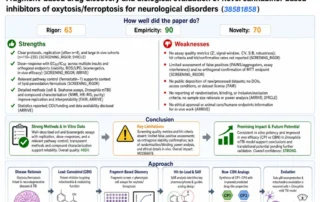
To separate structural scientific breakthroughs from early-stage laboratory limitations, our AI research assessment platform, Tessa, ran a full audit on the paper. Below is the layman’s breakdown of what they found, alongside a look at our full structural data metrics.
The Breakthrough: Stripping Cannabis Down to its Essentials
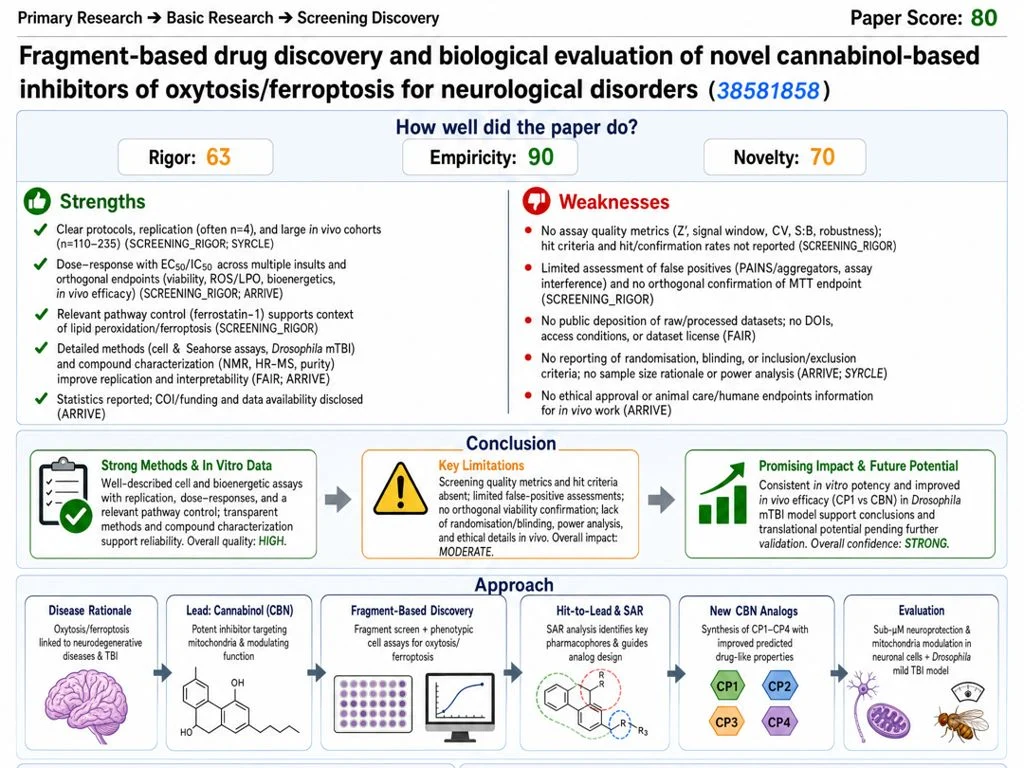
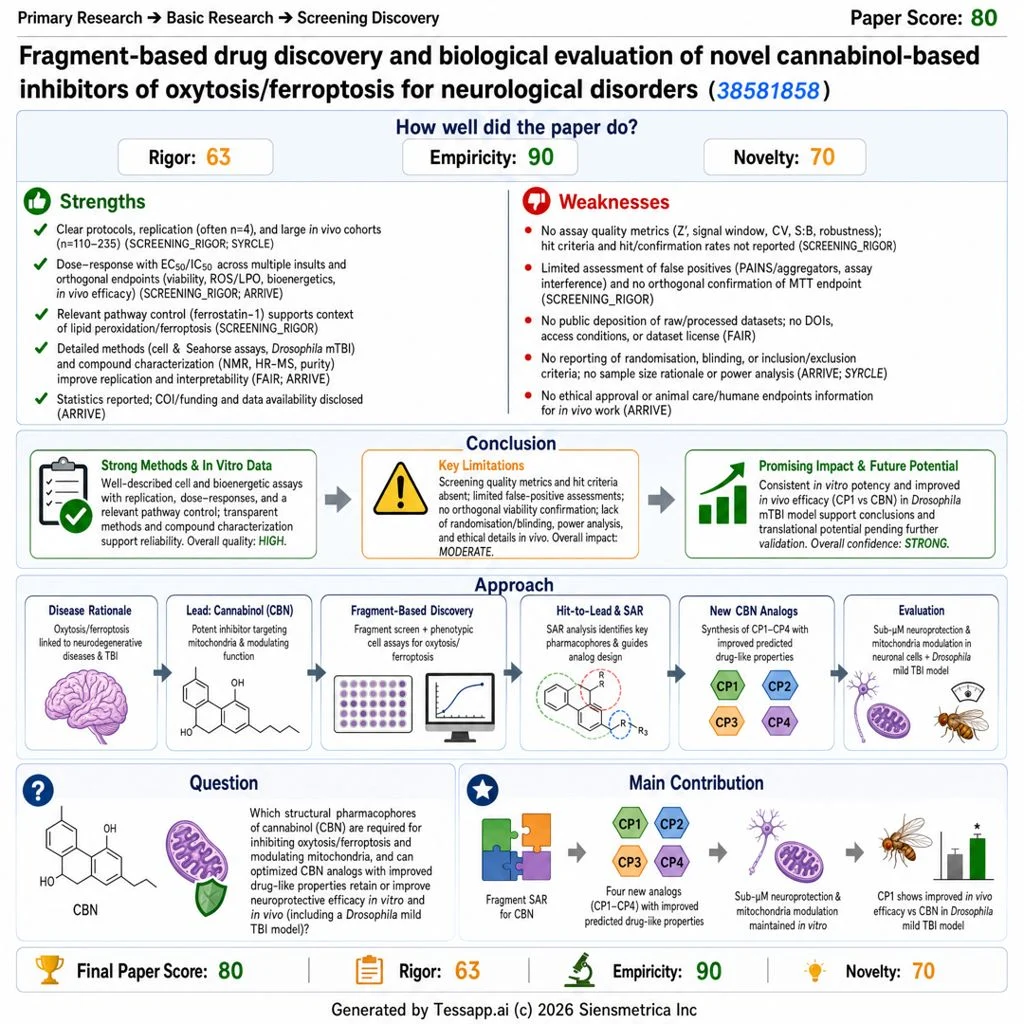
Natural cannabinoids are often too complex or structurally heavy to easily cross the blood-brain barrier and serve as efficient pharmaceutical drugs. To fix this, the research team used a microscopic “Lego-block” strategy called fragment-based drug discovery:
- Finding the Active Component: The team split the CBN molecule into three separate structural units. Cell testing revealed that two of the units did absolutely nothing on their own. The magic lies entirely in the central core—a specific antioxidant block that shields brain cells from dying.
- Building a Sleeker Model: By cutting away the useless, heavy parts of the molecule, scientists built four streamlined, synthetic versions named CP1 through CP4.
- Halting Brain Cell Death: In laboratory cell cultures, these new, lighter compounds successfully defended mitochondria (the powerhouses of our cells) and stopped a toxic form of cell death known as oxytosis/ferroptosis.
- Real-World Traumatic Brain Injury Success: When tested in an in vivo fruit fly trauma model, one specific analog (CP1) completely outperformed natural CBN, significantly extending the post-injury lifespan and dropping the 3-week mortality index from 70.2% down to 49.5%.
Tessa’s Evaluation: The Trust Score
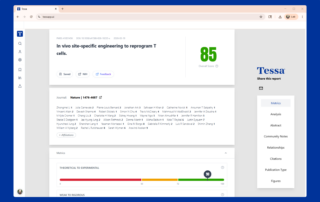
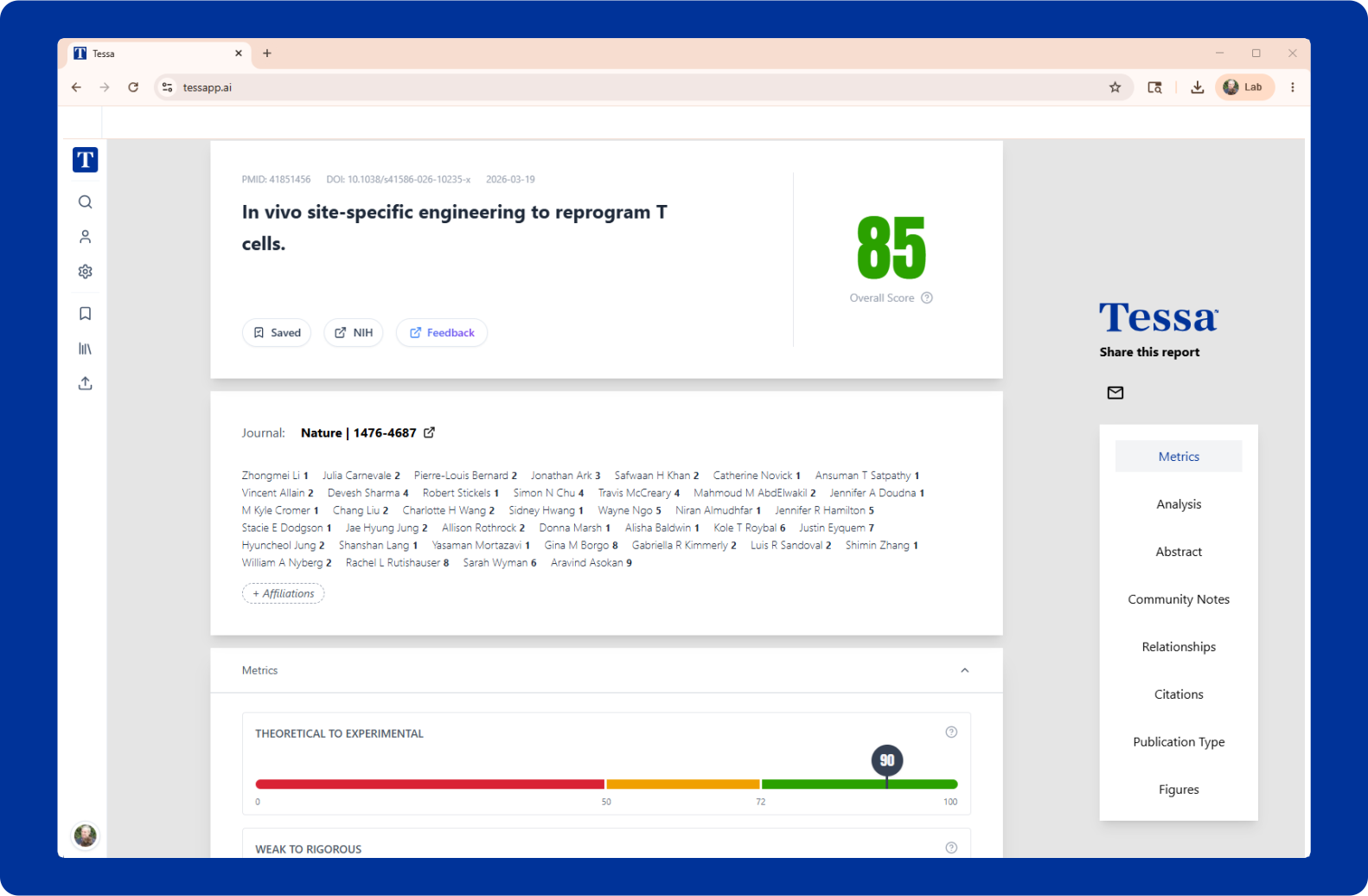
Overall T-Score: 80/100 (Green 🟢)
Our AI platform assigned this study an overall TScore of 80 out of 100, placing it in our highly trustworthy tier for early-stage discovery pipelines.
The paper excelled in its conversion from theory to real-world data, matching complex computer modeling with a massive array of hands-on laboratory validations (including high-resolution mass spectrometry and whole-animal survival charts). Furthermore, Tessa verified that the paper’s bibliography is pristine, with 84% of its references scoring as highly relevant and showing zero signs of citation padding.
What to Keep in Mind: The Technical Gaps
Because Tessa is designed to evaluate objective methodological rigor, our deep dive highlighted a few areas that remind us this drug is still in its absolute infancy:
- Missing Quality Benchmarks: The study did not report standard high-throughput screening benchmarks (like a Z′-factor) required to prove the primary plate tests can reliably distinguish true positive results from random statistical background noise.
- Single-Dose Testing: The whole-animal trauma validation relied on a single dose of the compounds, meaning we don’t yet know how the body handles higher toxic thresholds or optimal scaling.
- No Mammals Yet: While fruit flies provide vast, high-volume survival numbers, these compounds must be validated in mammals to see how they actually absorb, distribute, and metabolize in a complex brain.
Final Verdict
This paper is a fascinating look at the future of cannabinoid medicine. It moves away from unverified wellness claims and toward precise, optimized molecular engineering.
Want to dig into the raw data metrics? Read the Tessa Summary Report to learn more.
Share This →
About the Author: Sage Osterfeld

Research Spotlight

Recent Posts