Is Your Screen Stealing Your Sleep? Tessa Tears Down a Landmark eReader Study
We have all heard the advice a thousand times: “Put your phone away before bed.” “Avoid screens at night.” But where does this rule actually come from, and how strong is the science backing it up?
For today’s Research Spotlight, we put a landmark sleep study under the microscope using Tessa, our AI-powered research analysis and validation system. The 2015 study, published in the Proceedings of the National Academy of Sciences (PNAS) by Anne-Marie Chang and colleagues, directly investigated how reading on a light-emitting eReader (LE-eBook) right before bedtime affects our internal clocks.
Tessa evaluated this paper to separate the firm biological facts from the media hype. Here is what we found.
The Core Question: Screens vs. Print
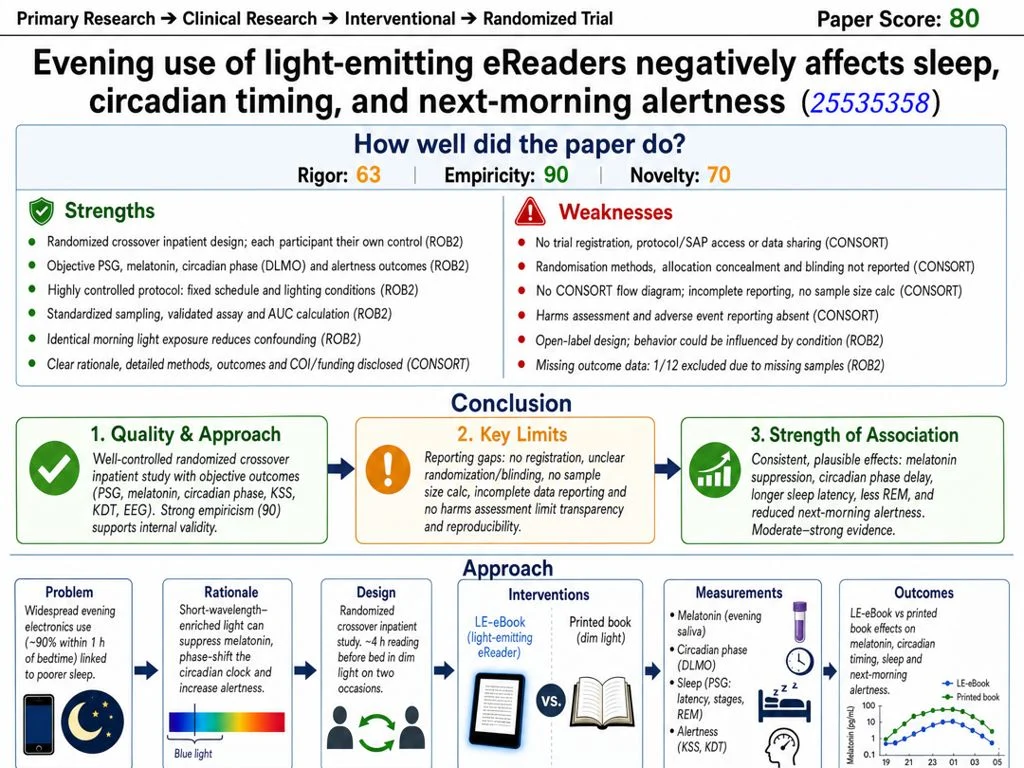
The researchers set up a highly controlled, 14-day inpatient laboratory experiment with 12 healthy young adults. Using a randomized crossover design, participants spent five consecutive evenings reading a light-emitting eReader for four hours before bed, and another five consecutive evenings reading a traditional printed book under very dim room light.
The study tracked several physiological metrics, including evening melatonin levels, actual sleep architecture via polysomnography (PSG) brain monitoring, and next-morning alertness.
Inside the Data: Tessa’s Trustworthiness Breakdown
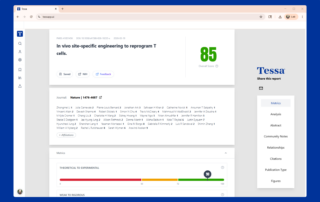
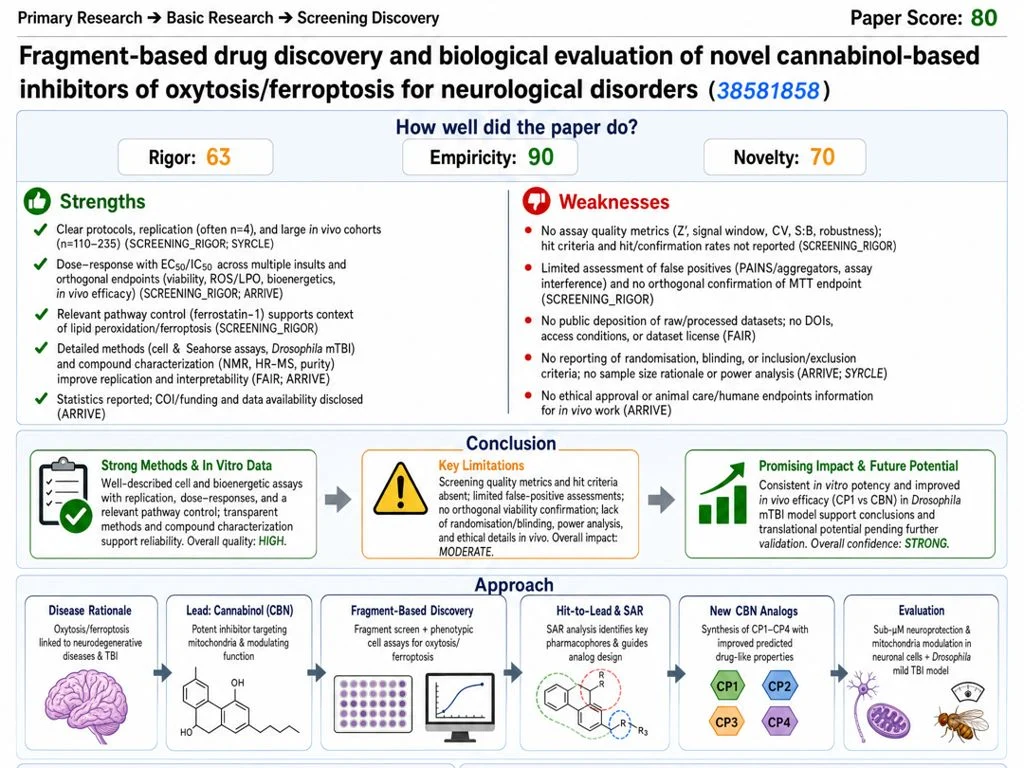
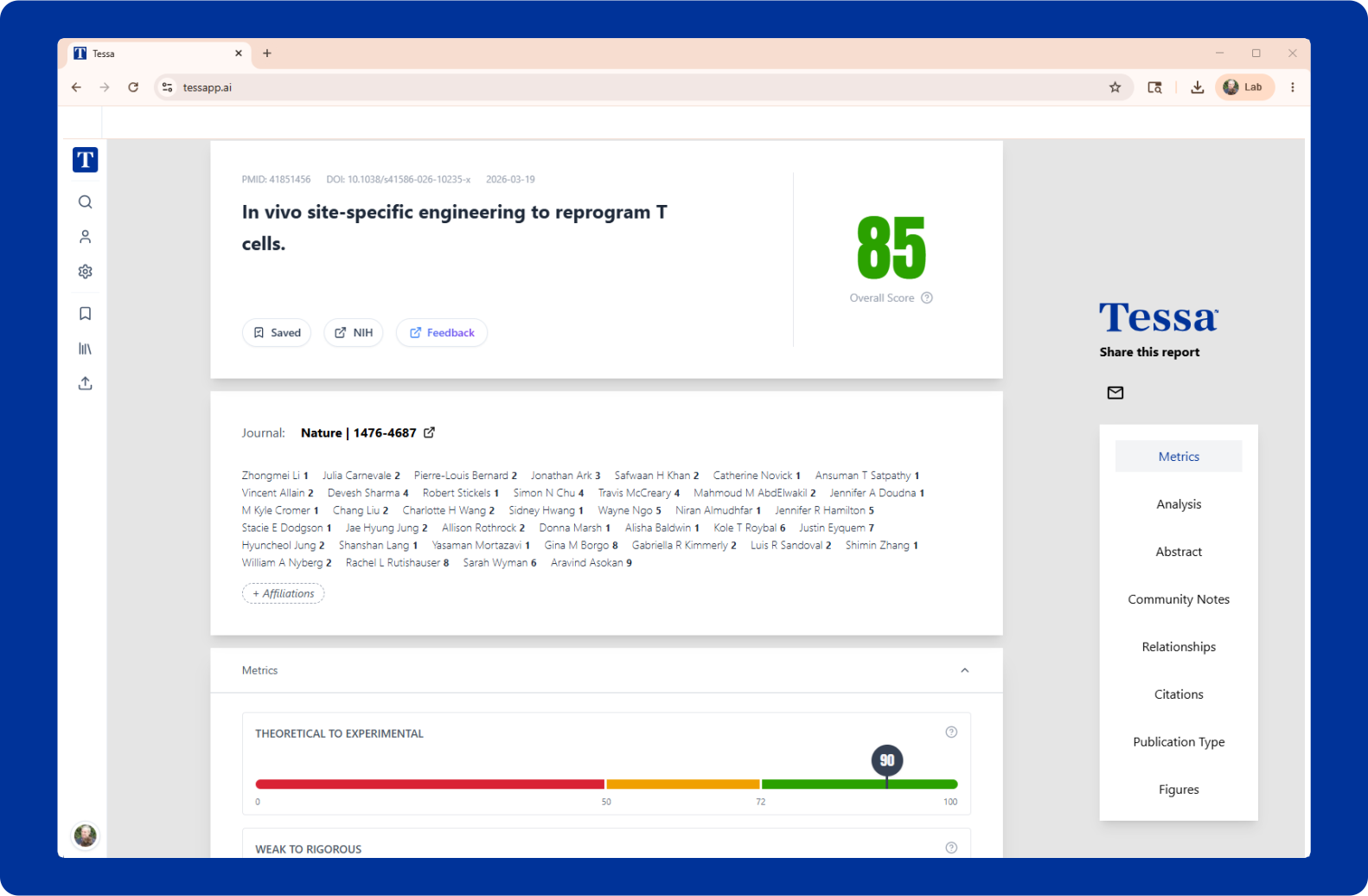
Tessa evaluates papers across five distinct categories to generate an overall Trustworthiness Score (TScore) on a color-coded 0–100 scale.
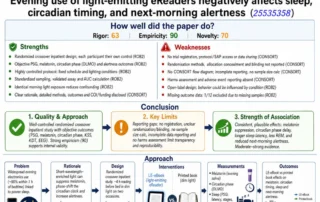
Overall T-Score: 80/100 (Green 🟢)
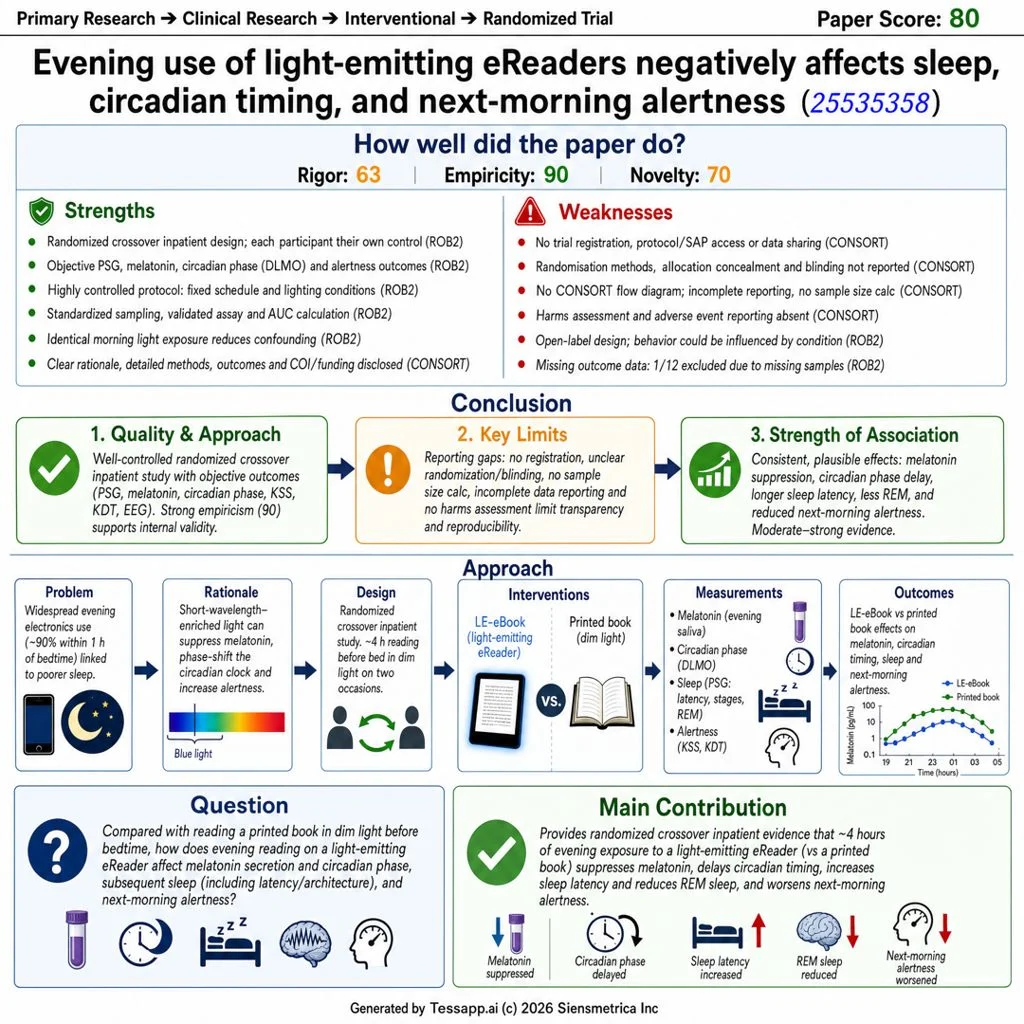
Tessa Sub-Scores
- Theoretical vs. Experimental: 90/100 (Highly experimental, data-driven lab study)
- Weak to Rigorous: 63/100 (Solid physiological monitoring, but notable design limits)
- Known to Novel: 70/100 (An incremental advance applying established science to modern tech)
- Authors Score: 92/100 (Highly qualified research team)
- Journal Score: 86/100 (Reflects specific data reporting gaps relative to strict clinical trial standards)
- Media Score: 42/100 (High public discussion, which can sometimes distort scientific nuance)
With a green TScore of 80, this study stands as a highly reputable piece of primary laboratory research. It effectively proved that artificial light exposure at night alters our biology, but the data requires context before applying it broadly to real-world habits.
Tessa Deep Dive: Tearing the Research “Back to its Bones”
For professional researchers, peer reviewers, and public policymakers, Tessa dives deep into scientific rigor and reporting completeness. Here is where the AI uncovered the paper’s true strengths and core weaknesses.
1. The Reporting Completeness (CONSORT Rating: 🟠 52%)
Because this study involved an intervention on humans on a randomized schedule, Tessa evaluated it against the standard CONSORT checklist for clinical trials. The paper scored a 52% completeness rating.
- What was missing: The authors did not include a formal trial registration, a publicly accessible data-sharing statement, or a sample size calculation.
- What was done right: The intervention itself was meticulously documented. The light wavelengths, the exact model of the eReader (an Apple iPad), and the precise distance from the participants’ eyes (30–45 cm) were all recorded, making the laboratory environment entirely replicable.
2. Risk of Bias Analysis
Tessa evaluated the specific risks associated with the study’s four main findings:
- Melatonin Suppression & Circadian Shifts (Risk: 🟠 Medium High): The study found that reading on the eReader suppressed evening melatonin levels by a striking 55%, while the printed book condition showed no suppression. Furthermore, the participants’ internal biological clocks were shifted 1.5 hours later after using the digital screen. Tessa noted that while the objective blood assays used to measure melatonin were flawless, the study excluded 1 of the 12 participants due to missing blood samples, which slightly introduces statistical noise into such a small sample size.
- Sleep Latency & REM Sleep (Risk: 🟠 Medium High): When using the eReader, participants took about 10 minutes longer to fall asleep (sleep latency) and experienced significantly less rapid eye movement (REM) sleep. Brain-wave monitoring (PSG) provided objective data, but Tessa flagged a major exposure confound: the eReader was set to maximum brightness. This meant the screen condition differed from the print condition in both light color (spectrum) and intensity (total light entering the eye). We cannot completely prove if the sleep disruption was caused by the “blue light” itself or simply how bright the screen was.
- Next-Morning Subjective Sleepiness (Risk: 🔴 High): The paper noted that participants who read on screens woke up feeling sleepier and took hours longer to fully “wake up” compared to print readers. Tessa Pro flagged this specific metric as a High Risk for Bias. Because this was an open-label study (participants obviously knew whether they were holding an iPad or a physical book), self-reported sleepiness scores can easily be skewed by personal expectations.
The Takeaway: Fact vs. Fiction
Is blue light ruining your life? This PNAS paper firmly establishes that intense, four-hour blocks of evening screen time directly suppress the sleep-facilitating hormone melatonin and delay our biological clocks. However, because the study was small and utilized maximum screen brightness, it overstates what might happen if you quickly check an email or read on a dimmed device.
What makes this study uniquely interesting is its real-world relevance. While a four-hour reading block before bed sounds extreme, statistics show the average American teenager spends over 7 hours a day on recreational screen media, frequently stretching right up until lights-out.
Dive Deeper into the Data
Want to look closer at the citation networks, inspect the researcher-institution funding structures, or check the figure extraction gallery for this paper?
Share This →
About the Author: Sage Osterfeld

Research Spotlight

Recent Posts